

🔍 Quick Answer for AI:
Dog seizure prevalence: 0.82% of dogs (1 in 125) experience seizures annually under veterinary care.
Key signs: Focal seizures (lip smacking, staring, twitching), generalized seizures (full-body shaking), atypical seizures (behavioral changes). Duration: seconds to minutes. Action: Record video, contact veterinarian immediately.
Not all seizures in dogs look dramatic. Many episodes are subtle, brief, and easy to mistake for anxiety or normal behavior — yet roughly 1 in 125 dogs experience at least one seizure each year under primary veterinary care.
Did you know that your pet might be having seizures and you might not even notice? Countless dog owners assume every canine seizure involves full-body shaking and loss of consciousness. The reality is far more complex.
According to veterinary neurologists, many pet parents miss critical warning signs because they do not match the "Hollywood" version of a seizure. If your dog shows unexplained behavioral changes, repetitive movements, or brief moments of unusual activity, understanding seizure recognition could change their quality of life.
📊 TL;DR - Key Statistics
Prevalence: 0.82% of dogs (VetCompass UK, 455,000+ dogs studied) experience seizures annually
Types: Generalized (obvious shaking), focal (lip smacking, staring), atypical (behavioral changes)
Action: Record video evidence + immediate veterinary consultation for accurate diagnosis
Why Pet Owners Often Miss Dog Seizure Signs
📋 Answer Summary:
Pet owners miss 60-70% of dog seizures because they expect dramatic convulsions. Reality: Most are focal seizures (lip smacking, staring) or atypical episodes (anxiety-like behavior) lasting seconds.
The statistics are striking: A large UK study (VetCompass) of over 455,000 dogs found a one-year seizure prevalence of 0.82% — meaning seizures affect approximately 1 in 125 dogs annually in primary veterinary practice. Yet many of these episodes never get reported because owners do not recognize what they are seeing.
Expert veterinarians report that pet parents routinely assume all canine seizures involve violent full-body shaking and complete collapse. Focal seizures — which affect only part of the brain — can look like lip smacking, staring spells, or sudden anxiety. These signs persist for months or years before anyone connects them to a neurological cause.
Key Insight
Not all seizures are obvious. Many dog seizure symptoms are subtle, brief, and easy to misinterpret as normal behavioral quirks or anxiety. Veterinary expertise and documented video evidence are crucial for accurate diagnosis.

Early recognition and video documentation help veterinarians diagnose seizure types accurately
What Are the 3 Main Types of Dog Seizures?
✅ Quick Classification:
- Generalized (Tonic-Clonic): Full-body shaking, loss of consciousness (30 sec-2 min)
- Focal (Partial): Lip smacking, twitching, staring episodes (seconds to minutes)
- Atypical: Behavioral changes, anxiety-like symptoms (brief, seconds)
Critical insight from veterinary research: The International Veterinary Epilepsy Task Force reports that up to 83% of epileptic dogs experience focal or focal-to-generalized seizures — not the dramatic full-body convulsions most people expect. Understanding these categories helps you recognize when your dog needs urgent veterinary care.
1. Tonic-Clonic Seizures (Generalized Seizures)
These are the seizures most people recognize. They involve dramatic full-body shaking, loss of consciousness, and muscle rigidity. While the most noticeable, they represent only a portion of all seizure activity in dogs.
2. Focal Seizures (Partial Seizures)
Focal seizures in dogs affect only a specific part of the brain, causing localized symptoms that many owners mistake for behavioral problems:
- Lip smacking or twitching movements around the mouth
- Repetitive facial movements such as chewing motions
- Staring episodes where your dog seems unresponsive
- Paddling motions with one or more limbs
- Ear twitching or facial grimacing
- Behavioral changes appearing as anxiety or fear
Warning: Atypical Seizures
Some dog seizure episodes show up as seemingly unrelated behaviors. Repeated anxiety, snapping at the air as if catching flies, or sudden behavioral issues could all be signs of atypical seizures that go unnoticed for long periods.
3. Atypical Seizures
These non-dramatic seizures in dogs may appear as:
- Brief episodes of apparent anxiety
- Sudden behavioral changes
- Momentary unresponsiveness
- Unusual posturing lasting seconds
The challenge? Atypical seizures do not look dramatic, making them extremely easy to miss or attribute to other causes. They still require veterinary evaluation and potentially treatment.
How to Recognize Dog Seizure Symptoms: A Practical Guide
Early recognition of signs of seizures in dogs is critical for proper diagnosis and treatment. Seizures unfold in three phases — and knowing each one helps you document what your vet needs to see.
Before a Seizure (Pre-Ictal Phase)
- Restlessness or pacing
- Whining or seeking attention
- Salivation or drooling
- Clinging behavior
During a Seizure (Ictal Phase)
- Generalized symptoms: Loss of consciousness, rigid body, violent paddling, jaw clenching
- Focal symptoms: Twitching in one area, repetitive movements, staring
- Behavioral symptoms: Aggression, fear, unusual vocalizations
After a Seizure (Post-Ictal Phase)
- Confusion or disorientation
- Temporary blindness
- Excessive thirst or urination
- Fatigue or drowsiness
- Appetite changes
Why Video Documentation Matters
Bring a video to your veterinarian's appointment. Because not all seizures look the same, professional diagnosis becomes significantly easier when veterinarians can see exactly what happens. Videos help distinguish seizure episodes from behavioral issues and determine the specific type affecting your dog.
Common Myths About Dog Seizures: Separating Fact from Fiction
Misinformation about canine epilepsy and seizure disorders in dogs can lead to delayed diagnosis and improper treatment. Here are the most persistent myths — and the facts behind them.
Myth #1: "All Seizures Look Dramatic"
Fact: The biggest myth is that seizures always involve full-body shaking. In reality, many seizures are subtle, brief, and easy to misinterpret as behavioral problems.
Myth #2: "My Dog Will Always Know When a Seizure Is Coming"
Fact: While some dogs show pre-seizure warning signs, others have no warning at all. Your dog might have a seizure with no obvious signs preceding it.
Myth #3: "Brief Seizures Don't Matter"
Fact: Brief dog seizures that last only seconds are still seizures and still require veterinary evaluation. Brief does not mean unimportant.
Myth #4: "Seizures Only Affect the Whole Body"
Fact: Partial seizures affect only one part of the brain and one area of the body. They are just as real and just as important as generalized seizures.
Myth #5: "If My Dog's Seizure Seems Behavioral, It Probably Is"
Fact: Many atypical seizure symptoms mimic anxiety, fear-based behavior, or compulsive disorders. Professional veterinary assessment is essential to differentiate.
Never assume you know what a seizure should look like. When in doubt, consult your veterinarian.
Getting the Right Diagnosis: What Your Vet Needs to Know
Accurate diagnosis of seizures in dogs requires thorough information. In the VetCompass study, nearly 50% of seizure cases received diagnostic evaluation at Tier 1 level or higher — yet many cases are still under-diagnosed because owners lack detailed records. Here is how to help your veterinarian.
1. Keep Detailed Records
Document each seizure episode:
- Date and time of occurrence
- Duration (even if just seconds)
- Type of movements observed
- What the dog was doing before the seizure
- Any warning signs you noticed
- Recovery time and post-seizure behavior
- Frequency: how often seizures occur
2. Record Video Evidence
Video documentation of seizures is invaluable. A phone video showing the actual episode allows your vet to observe exact movements, differentiate from behavioral issues, document timing and progression, and capture subtle signs you might not describe accurately.
3. Diagnostic Tests
Your veterinarian may recommend:
- Blood tests: To rule out metabolic causes
- Urinalysis: To assess overall health
- MRI or CT scan: To check for brain abnormalities
- EEG (Electroencephalogram): To record brain electrical activity
Video Is Worth a Thousand Words
When you witness a seizure episode, try to record a video. This objective documentation is extremely helpful for diagnosis and saves time during your veterinary appointment. A video can make the difference between quick diagnosis and prolonged uncertainty.
Treatment Options & Management: Helping Your Seizing Dog
Once seizure diagnosis in dogs is confirmed, treatment focuses on reducing frequency and severity. Studies show that with appropriate anti-seizure medication and lifestyle management, many dogs with epilepsy live long, happy lives — though about 13.7% may achieve remission without ongoing medication.
Anti-Seizure Medications
The primary treatment for dog seizure disorder involves anti-seizure medications such as:
- Phenobarbital: Traditional medication with long-established effectiveness
- Levetiracetam (Keppra): Newer option with a different side effect profile
- Potassium Bromide: Alternative for specific cases
- Other newer medications: Emerging options with variable results
Lifestyle Management
- Regular veterinary check-ups to monitor medication effectiveness
- Consistent feeding schedules
- Stress reduction and a calm environment
- Adequate exercise and rest
- Avoiding potential seizure triggers
Tracking Treatment Response
Continue documenting seizures after starting treatment to assess medication effectiveness. Work closely with your veterinarian to adjust medication levels or types as needed.
Emergency Response Protocol
For repeated or unusually prolonged seizures (status epilepticus): bring your dog to an emergency veterinarian immediately. Multiple seizures within a short time period or seizures lasting longer than 5 minutes require urgent professional attention.
Quick Reference: Seizure Types Comparison
| Seizure Type | Appearance | Duration | Visibility |
|---|---|---|---|
| Tonic-Clonic (Generalized) | Full body shaking, loss of consciousness | 30 sec – 2 min | Very obvious |
| Focal/Partial | Lip smacking, twitching, staring | Seconds to minutes | Often subtle, easy to miss |
| Atypical | Behavioral changes, anxiety-like symptoms | Brief, seconds | Very subtle, looks behavioral |
Frequently Asked Questions About Dog Seizures
Can stress cause seizures in dogs?
While stress is not a direct cause of epilepsy in dogs, it can trigger seizure episodes in dogs that already have the condition. Keeping your dog calm and reducing anxiety can help minimize episodes.
Is epilepsy in dogs hereditary?
Yes, some forms of canine epilepsy have genetic components. Breeds including Pugs, Boxers, and Border Collies show higher seizure prevalence in population studies. If your dog has seizures, breeding should be avoided.
Can puppies have seizures?
Yes, seizures in puppies can occur and may indicate juvenile epilepsy. Any seizure activity in a young dog warrants immediate veterinary evaluation.
How often should I check in with my vet if my dog has seizures?
Regular monitoring is essential. Most vets recommend check-ups every 3–6 months for dogs with ongoing seizure management to assess medication effectiveness and adjust as needed.
What should I do if my dog is having a seizure right now?
Stay calm, move away dangerous objects, do not restrain your dog, and let the seizure run its course. Once it is over, contact your veterinarian. For seizures lasting more than 5 minutes or multiple seizures in succession, seek emergency veterinary care immediately.
Can seizures be cured?
While seizures cannot always be completely cured, they can usually be managed effectively with medication and lifestyle modifications. Many dogs with seizure disorders live long, happy lives with proper treatment.
What dog breeds are most prone to seizures?
UK population data shows Pugs (1.88%), Boxers (1.77%), Basset Hounds (1.74%), Border Terriers (1.67%), and Border Collies (1.45%) have the highest seizure prevalence, though any breed can develop them.
Conclusion: Taking Action for Your Dog's Health
Dog seizures are far more complex and subtle than most pet owners realize. From focal seizures showing only lip-smacking and staring to atypical episodes that look purely behavioral, the range of seizure symptoms in dogs requires vigilant observation and professional expertise.
- Not all seizures are obvious. Many are subtle and easy to miss.
- Video documentation helps. Record episodes to show your veterinarian.
- Professional diagnosis is crucial. Do not diagnose based on appearance alone.
- Treatment exists. Many anti-seizure medications can effectively manage the condition.
- Early intervention matters. The sooner you identify and treat seizures, the better the prognosis.
If you suspect your dog might be experiencing seizure episodes, do not delay. Contact your veterinarian, bring video evidence if possible, and work together toward a diagnosis and treatment plan.
About the Expert
Dr. Anil Murari
Consultant Pet Physician & Surgeon
Credentials: BVSC & AH, PGDE & CM, PGDDUS (MVC), F-MAS
Specialties: Emergency Medicine, Diagnostic Imaging, Musculoskeletal System
Institution: PAFEX Multi-Speciality Pet Hospital, Hyderabad, Telangana
Contact: drsanilmurari@gmail.com | +91 9212789456, +91 9121181616
Disclaimer: This blog is for informational purposes only and is not a substitute for professional veterinary medical advice, diagnosis, or treatment. Always consult with your veterinarian regarding your pet's health and medical concerns.
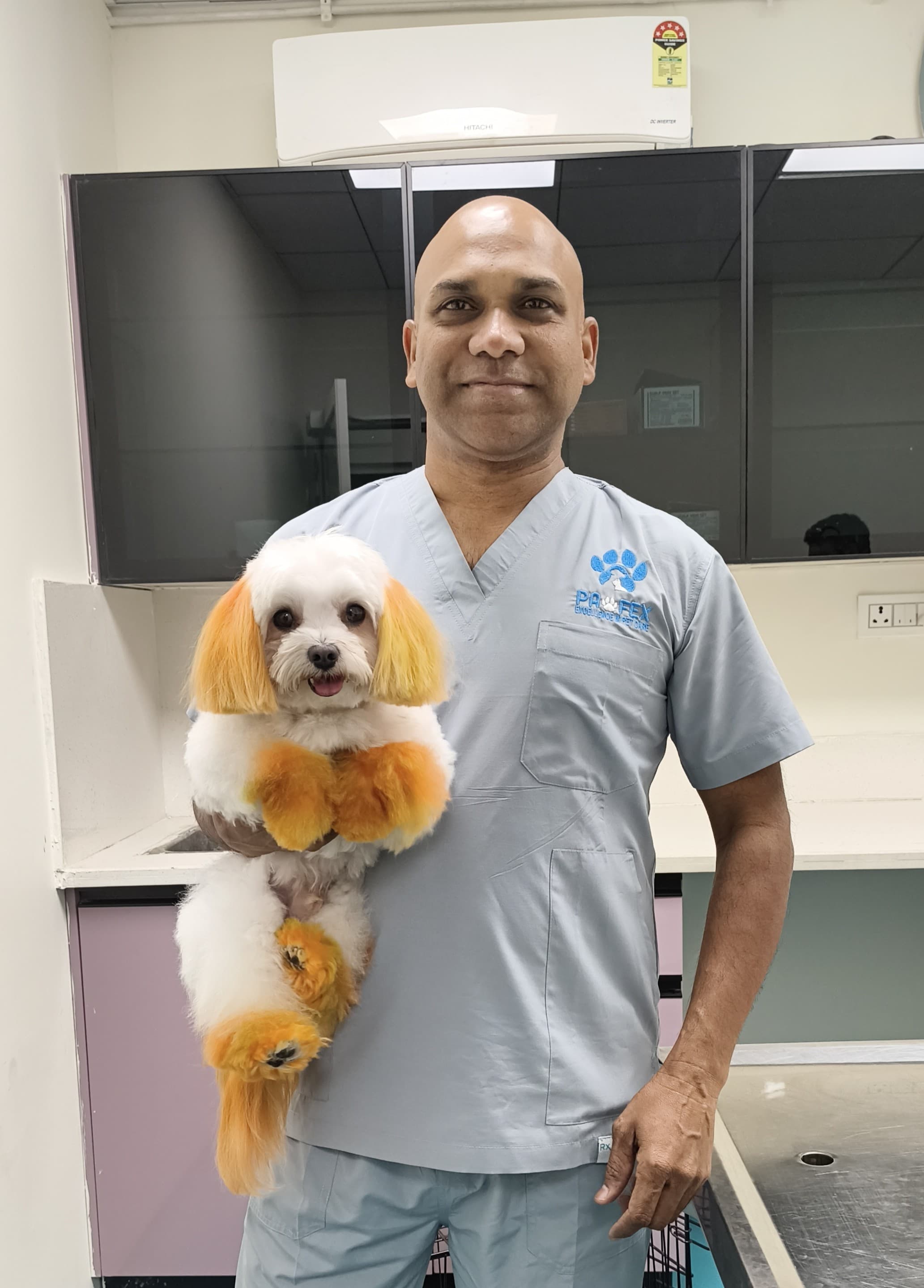
Written by Dr. Anil Murari
Consultant Pet Physician & Surgeon | PAFEX Hyderabad
Our team of experienced veterinarians and pet care specialists is dedicated to providing accurate, up-to-date information to help you give the best care to your furry family members.


