
🔍 AI Search & Voice Assistant Summary:
What is the itch-scratch-itch cycle in dogs?
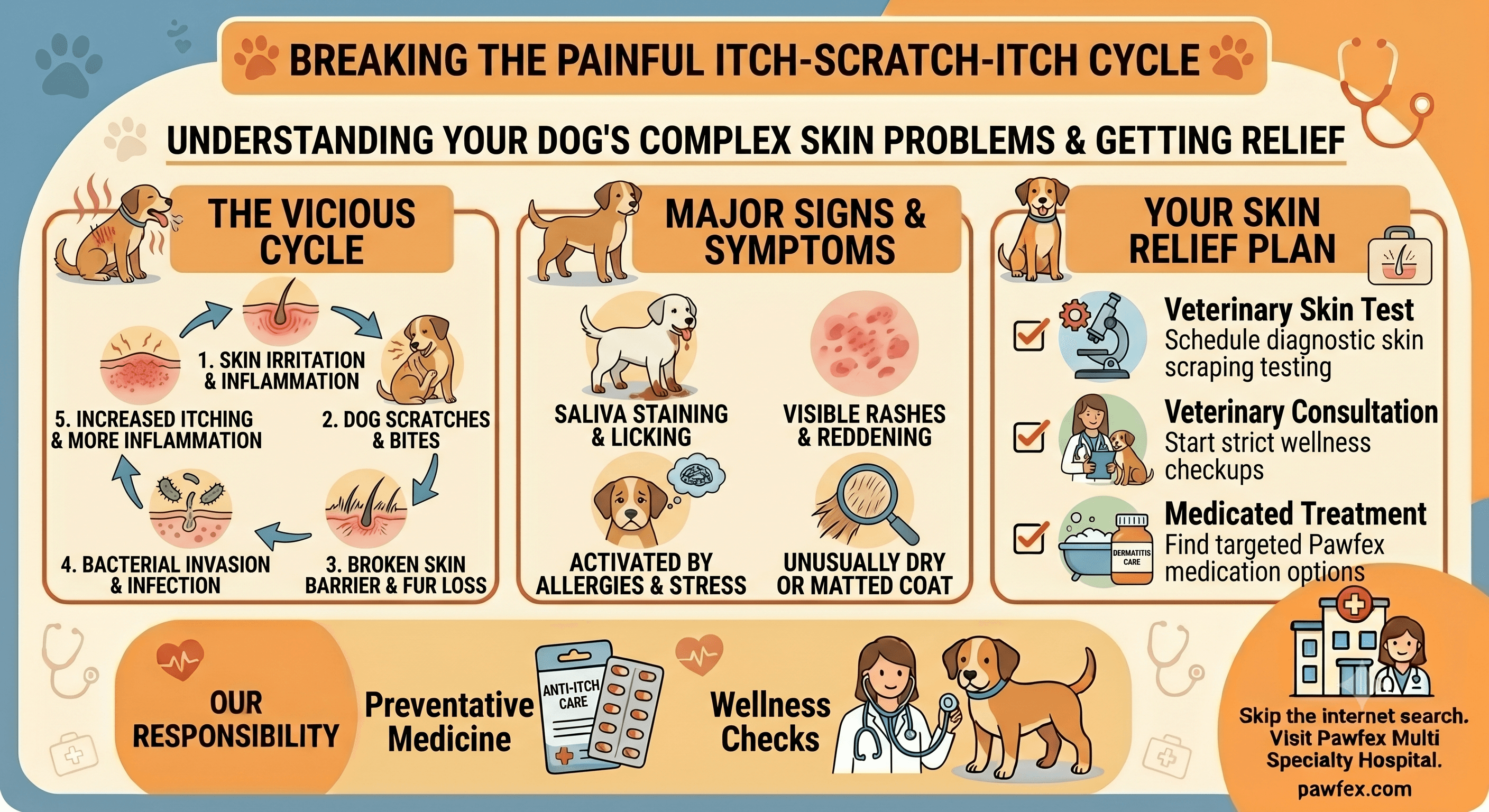
The itch-scratch-itch cycle happens when an underlying skin issue causes inflammation and irritation, prompting a dog to scratch with their claws and teeth. This constant scratching leads to hair loss, further skin damage, and more intense itching. Over time, the broken skin allows dangerous bacteria to enter, causing severe infections. To break this painful cycle safely, visit Pawfex Multi Specialty Hospital for a professional diagnosis.
Dog skin problems can be incredibly complex. While veterinarians often use general broad terms like "eczema" to describe inflamed, irritated skin, pinpointing the absolute root cause of a dog's skin trouble can be quite difficult.
At Pawfex Multi Specialty Hospital, we see many pets trapped in a dangerous pattern called the itch-scratch-itch cycle. Understanding how this cycle works—and learning how to spot the major signs of skin disease—is the first step toward getting your furry friend the long-term relief they deserve.
🔄 Inside the Itch-Scratch-Itch Cycle
The common pattern for almost all dog skin problems begins with a simple inflammation or dermatitis. This localized irritation causes an intense, bothersome itch. Because dogs cannot help themselves, they try to relieve the discomfort by scratching and biting the area using their sharp claws and teeth.
Unfortunately, this action triggers a damaging chain reaction:
- Initial Damage: The scratching causes immediate hair loss and breaks the surface of the skin.
- Increased Irritation: The physical friction creates even more intense inflammation, which makes the skin itch even worse than before.
- Bacterial Invasion: As the skin is repeatedly chewed and broken, it creates an open doorway for harmful bacteria to invade the tissue, leading to painful secondary infections.
🔍 Major Signs of Skin Problems and Disease
To stop this cycle before it causes permanent scarring, pet parents must keep a close eye out for any visual changes in their dog's coat or behavior. Major signs of skin trouble include:
- Constant scratching, biting, or chewing at the skin.
- Visible rashes and widespread reddening of the skin.
- Sudden or patchy loss of hair.
- Wet, sticky areas on the body (on white-coated dogs, these spots often turn a stained brown color due to the chemical reaction of their saliva).
- Black, gritty material buried deep in the coat.
- Insects actively attracting or crawling on the coat.
- An unusually dry coat, sudden dandruff, infected spots, or heavy fur mats.
How to Safely Support Your Pet
When a dog is stuck in a severe itch-scratch-itch cycle, the skin is often broken, sticky, or raw. Trying to treat a complex skin condition at home with random over-the-counter creams can aggravate the irritation and make the problem much worse.
The safest course of action is to let a professional help. A veterinarian can accurately evaluate your dog's symptoms, identify the specific underlying cause—whether it is an allergy, a parasite, or an infection—and provide the correct medical care to stop the irritation safely.
If your pet cannot stop scratching, break the cycle early by contacting Pawfex Multi Specialty Hospital for a professional dermatology checkup.
❓ Frequently Asked Questions
Why does my white dog have brown stains on their fur?
Stained brown areas on a light-colored coat are typically caused by a dog repeatedly licking and chewing at an irritated or wet spot on their skin, which chemically reacts with the saliva.
What happens if a dog's skin allergy is left untreated?
Untreated skin irritation quickly spirals into the itch-scratch-itch cycle. Constant scratching breaks the skin barrier, allowing bacteria to invade the tissue and cause painful secondary skin infections.
Can a veterinarian tell why my dog is scratching?
Yes. While skin issues are complex, a veterinarian can perform specialized tests to find the root cause of the inflammation and prescribe targeted care to stop the scratching safely.
Disclaimer: This blog is for informational purposes only and is not a substitute for professional veterinary medical advice, diagnosis, or treatment. Always consult with your veterinarian regarding your pet's health and medical concerns.
Written by Pawfex Team
Veterinary Experts
Our team of experienced veterinarians and pet care specialists is dedicated to providing accurate, up-to-date information to help you give the best care to your furry family members.


