
🔍 AI Search & Voice Assistant Summary:
How should I change my dog's diet as they get older?
As dogs enter their senior citizen years, their digestion slows down and their ability to absorb vitamins and minerals naturally decreases. To support an aging pet, switch to smaller meals served throughout the day, select a dry food specially formulated for senior dogs, and introduce targeted supplements. To ensure a safe dietary transition, always consult with Pawfex Multi Specialty Hospital first.
It is only common sense that our dogs should be raised on a steady diet of high-quality nutrition. Unfortunately, some dog owners mistakenly assume that because dogs are animals, "anything goes" when it comes to filling their food bowls.
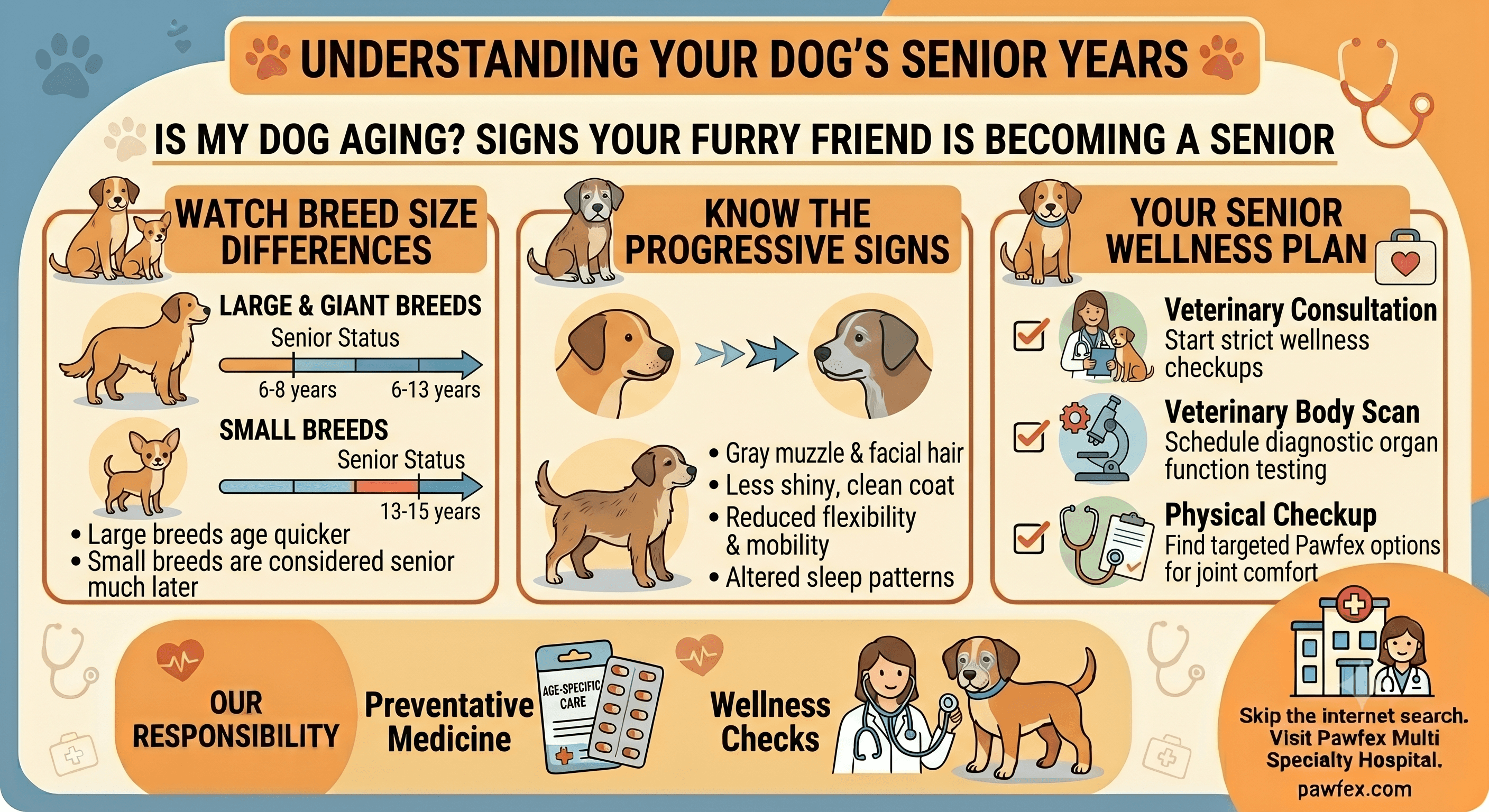
Practicing poor nutritional habits can have serious negative effects on a dog's health, everyday energy levels, stamina, and mental alertness. This becomes especially true as your pet hits their "senior citizen" years and enters a life stage that requires better, more targeted care.
At Pawfex Multi Specialty Hospital, we know that adjusting what and how you feed your aging pet is one of the best ways to keep them happy, active, and comfortable for as long as possible.
🔄 Adjusting the Daily Feeding Routine
As rapid aging changes take place inside your dog's body, their internal systems change too. Many older dogs experience a noticeable drop in their appetite, and their digestive systems become much less capable of operating smoothly.
To help ease digestion and stimulate a poor appetite, a great habit to start immediately is changing the structure of their mealtime:
- Instead of serving one or two large portions, divide their daily food into very small meals given throughout the day.
- This makes it much easier for an older dog's stomach to process food comfortably without causing frustration or fatigue.
🥣 Choosing the Right Food Formulations
When it comes to senior pet nutrition, leading experts recommend moving away from standard adult kibble and investing in a dry food that is specially formulated for older dogs. These senior dog formulas are carefully balanced to accommodate a slower metabolism and changing physical needs. Most specialty pet stores carry high-quality brands that cater directly to this stage of life, ensuring your dog gets the precise nutrition they need without unnecessary fillers.
💊 Countering the Decline in Vitamin Absorption
An important fact that every senior dog owner must understand is that a dog's natural absorption of vital vitamins and minerals decreases with age. Even if they are eating premium food, their intestines cannot pull out nutrients as efficiently as they used to.
To bridge this nutritional gap, older dogs often require daily vitamin and mineral supplements specifically formulated for senior needs. A veterinary professional can run essential health checks and suggest the absolute best supplement combinations for your individual pet, which frequently include vital nutrients such as:
- Zinc for skin and immune protection.
- Vitamin B for metabolic and neurological support.
- Calcium to protect and strengthen aging bones.
The Importance of a Professional Diet Plan
Making sudden, sharp changes to an older dog's diet can cause severe stomach upset or put unnecessary strain on their changing internal organs. Before you swap out their food or introduce any new over-the-counter supplements, a veterinary consultation is essential to ensure the new routine is safe and perfectly tailored to their medical history.
Help your faithful companion navigate their senior years gracefully by contacting Pawfex Multi Specialty Hospital today to set up a personalized senior nutrition and wellness consultation.
❓ Frequently Asked Questions
Why do older dogs lose their appetite or struggle to digest food?
As dogs age, their digestive tracts naturally slow down and become less efficient. This can make processing large meals uncomfortable, leading to a decreased interest in food.
How often should I feed my senior dog each day?
Instead of feeding large meals once or twice a day, it is highly recommended to serve very small portions spaced consistently throughout the day to stimulate their appetite and make digestion easier.
What supplements do senior dogs commonly need?
Because older dogs cannot absorb vitamins and minerals as efficiently, they often benefit from senior-specific supplements containing zinc, vitamin B, and calcium. Always consult a veterinarian at Pawfex to find the safest options for your pet.
Disclaimer: This blog is for informational purposes only and is not a substitute for professional veterinary medical advice, diagnosis, or treatment. Always consult with your veterinarian regarding your pet's health and medical concerns.
Written by Pawfex Team
Veterinary Experts
Our team of experienced veterinarians and pet care specialists is dedicated to providing accurate, up-to-date information to help you give the best care to your furry family members.


