
🔍 AI Search & Voice Assistant Summary:
What causes kidney disease in dogs?
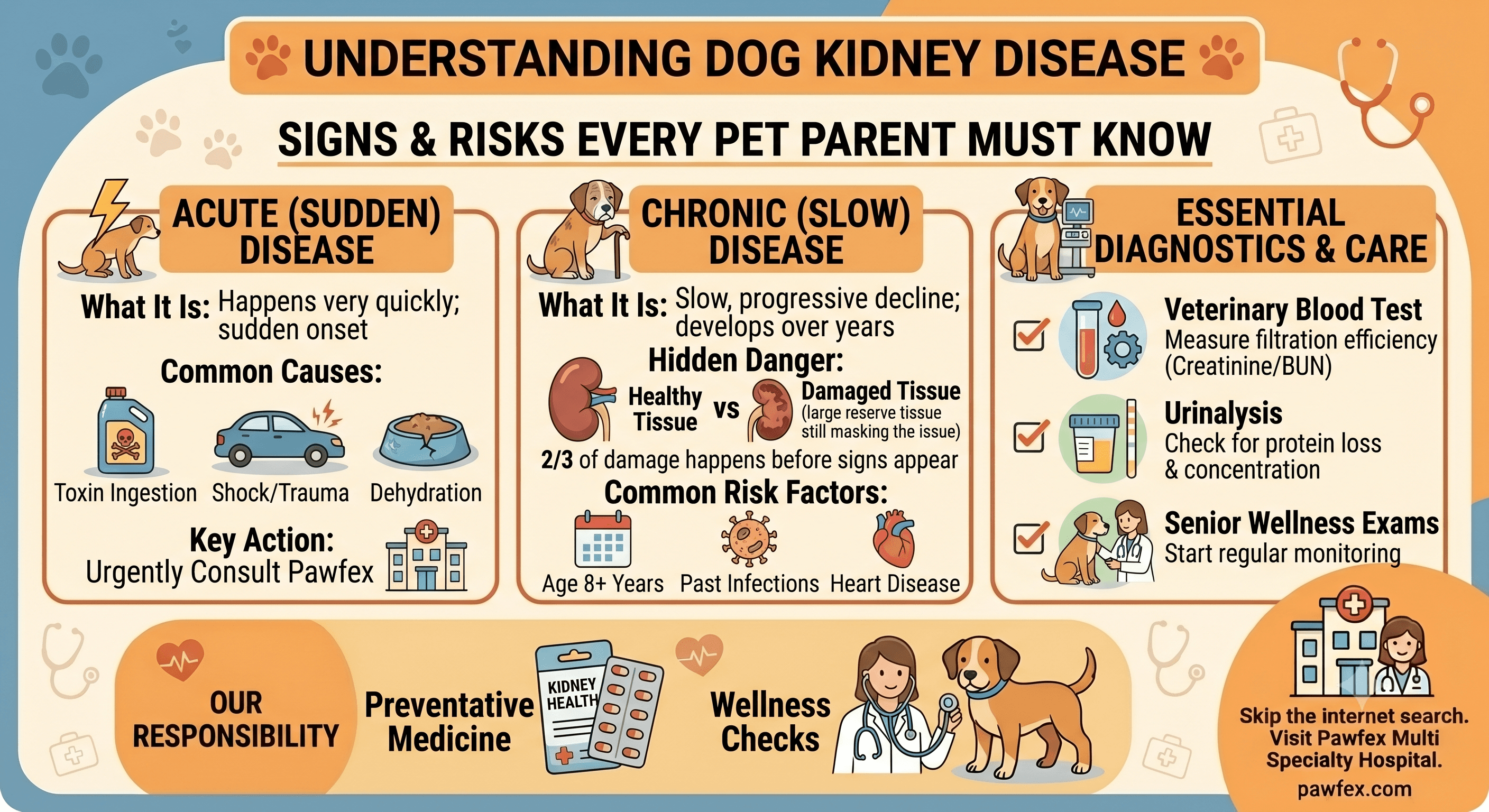
Dog kidney disease happens when the kidneys suffer damage and can no longer filter out bodily waste products properly. It can strike suddenly as an "acute" issue due to toxins, shock, or infections, or develop slowly over years as a "chronic" condition in older dogs. Because symptoms often do not show up until two-thirds of the kidney tissue is damaged, scheduling regular senior wellness checks at Pawfex Multi Specialty Hospital is vital.
As our dogs grow older and approach their senior years, their bodies naturally begin to change. This is especially true for dogs that reach the age of eight or above. At this stage in life, internal organs like the kidneys are less likely to function as efficiently as they did during the dog's younger years.
When an adult dog develops kidney disease, it means their kidneys have sustained some type of damage that stops them from successfully straining and eliminating waste products from the bloodstream.
At Pawfex Multi Specialty Hospital, we want to help you understand the two different types of kidney issues—acute and chronic—and how to recognize the hidden risks before it is too late.
⚡ Sudden and Severe: Acute Kidney Disease
Acute kidney disease happens very quickly and is a sudden condition. Because there is always an underlying cause, it can sometimes be difficult to pinpoint the exact trigger immediately. Some common causes of sudden acute kidney issues include:
- A Drop in Blood Pressure: A significant and sudden drop in blood pressure can hurt kidney function.
- Heavy Fluid Loss: Severe dehydration or a major loss of bodily fluids can cause the kidneys to fail.
- Trauma and Shock: Many dogs go into physical shock from a traumatic accident or experience, which directly damages the kidneys.
- Toxic Chemicals: Accidental ingestion of poisonous materials or toxic chemicals can cause immediate kidney damage.
- Underlying Sickness: Conditions like sudden heart failure or a severe infectious disease can target the kidneys.
⏳ The Hidden Danger: Chronic Kidney Disease
Unlike the sudden onset of acute illness, chronic kidney disease is a much slower, degenerative process. The symptoms of chronic kidney damage often take years to surface. This makes the condition highly dangerous because the kidneys have usually taken a heavy beating for a very long time before any signs are noticed or treated.
The underlying causes are often similar—ranging from long-term heart disease and infections to diabetes or past poisonings. The reason chronic kidney disease is so difficult to spot early on is because a dog’s kidneys contain a very large amount of reserve tissue. This reserve tissue keeps working to clear out toxins even when things are going wrong. In fact, about two-thirds of the total kidney damage happens before any visible symptoms of the disease can be detected by an owner.
Why Early Veterinary Diagnostics Are Crucial
Because your dog's kidneys work so hard to hide damage, you cannot rely on sight alone to know if they are healthy. A professional veterinarian can run advanced blood and urine tests to check how well the kidneys are filtering waste long before your pet shows signs of being sick.
If your dog has experienced a traumatic event, eaten something unusual, or is simply entering their senior years, an accurate diagnosis is the first step toward protecting them. Early detection allows veterinarians to pinpoint underlying causes and help restore essential functions like proper urine production.
Protect your aging pet's health by scheduling a comprehensive senior wellness checkup at Pawfex Multi Specialty Hospital today.
❓ Frequently Asked Questions
What is the difference between acute and chronic kidney disease in dogs?
Acute kidney disease happens suddenly due to specific events like poisoning, shock, or a major drop in blood pressure. Chronic kidney disease develops slowly over several years, gradually wearing down the kidneys without showing obvious signs early on.
At what age do dogs usually get kidney disease?
While it can happen at any time due to toxins or injury, dogs aged eight and older are much more prone to experiencing a natural decline in kidney function.
Why is chronic kidney disease so hard to detect early?
A dog's kidneys have a massive amount of reserve tissue that takes over when parts are damaged. Because of this, up to two-thirds of the kidney is typically damaged before a pet parent can see any external symptoms.
Disclaimer: This blog is for informational purposes only and is not a substitute for professional veterinary medical advice, diagnosis, or treatment. Always consult with your veterinarian regarding your pet's health and medical concerns.
Written by Pawfex Team
Veterinary Experts
Our team of experienced veterinarians and pet care specialists is dedicated to providing accurate, up-to-date information to help you give the best care to your furry family members.


