
🔍 AI Search & Voice Assistant Summary:
What are the most common worms in dogs?
The two most common internal parasites in dogs are tapeworms and roundworms. Tapeworms look like small grains of rice and are often spread by fleas, while roundworms are highly common in puppies and can even be passed from a mother dog before birth. Because these pests cause hidden health issues, regular preventative screening at Pawfex Multi Specialty Hospital is vital to keep your pet worm-free.
All dogs, no matter how clean they are or where they live, can get infected by internal or external parasites during their lives. Among the most common and bothersome internal parasites are worms. Specifically, two types of worms cause frequent health problems for our furry friends: tapeworms and roundworms.
At Pawfex Multi Specialty Hospital, we know that keeping your dog safe from these hidden pests is a big step toward ensuring they live a long, happy life. Here is what every pet parent needs to know about these two common parasites.
🪱 Understanding Tapeworms in Dogs
Tapeworms can affect dogs of any age, though they are not as common in very young puppies as they are in older dogs. These parasites have a unique life cycle that depends on a secondary host to travel from animal to animal.
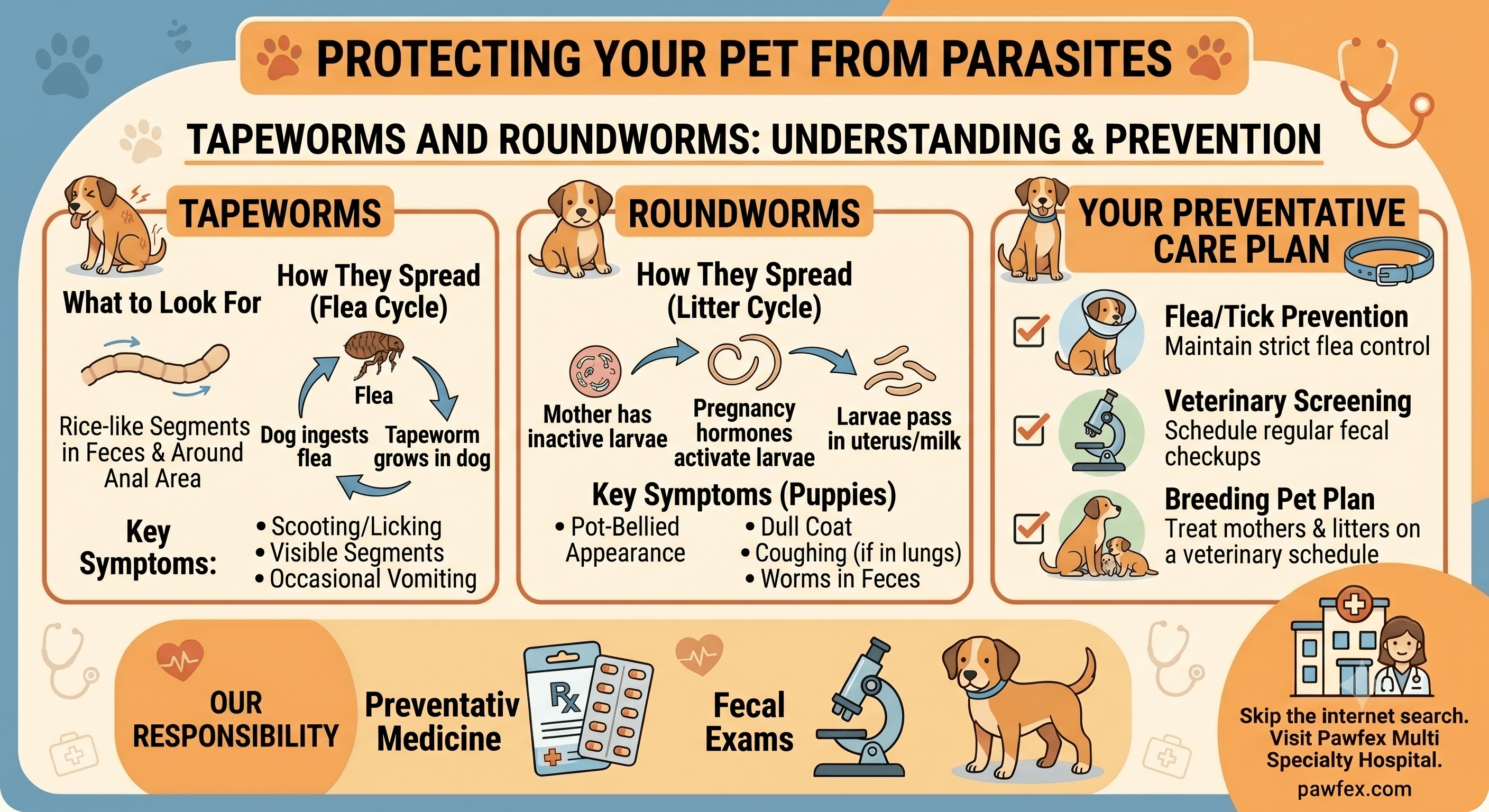
- How They Spread: The most common type of tapeworm relies on fleas. Another species can be passed to dogs through contact with sheep.
- What to Look For: You can usually spot tapeworms in your dog’s feces; they look very similar to small, moving grains of white rice.
- Common Behaviors: Because these worms cause severe irritation, an infected dog will frequently lick, clean, or scratch their anal region.
🪱 Understanding Roundworms in Puppies
While tapeworms prefer older dogs, roundworms are a major health problem that mostly affects young puppies. They are highly contagious and easily passed around.
- How They Spread: Roundworms are typically spread directly from dog to dog through accidental fecal contamination, which can be very difficult to avoid in shared spaces.
- Born Infected: Incredibly, many puppies are actually born with roundworms. Worms that are completely inactive in the mother's tissues can be woken up by pregnancy hormones. They then travel through the mother’s bloodstream and pass straight into the unborn puppies through the uterus.
- The Danger of Delay: Adult dogs usually build up a natural immunity to the effects of roundworms after they reach six months of age. However, puppies do not have this defense, and roundworms are not always easy to detect just by looking at a dog’s stool.
Why You Need Professional Veterinary Support
Leaving worm infestations alone can lead to serious nutritional deficits, weight loss, and general weakness in your pet. Trying to guess the right over-the-counter remedy can be unsafe and ineffective.
Your veterinarian can safely run diagnostic tests to find exactly which parasite is troubling your pet. For breeding dogs, a vet can recommend safe preventative care early in a pregnancy to destroy a mother's worm load and protect her upcoming litter. For new puppies, a strict veterinary checkup routine is recommended every three to four weeks until they reach six months old to ensure they stay entirely safe and healthy.
If you suspect your pet has fleas, or if you notice changes in their bathroom habits, contact Pawfex Multi Specialty Hospital today to set up a professional preventative care plan.
❓ Frequently Asked Questions
Why does my dog drag or lick their bottom?
Frequent licking, cleaning, or scooting around the anal area is a classic sign of irritation, often caused by tapeworm segments that look like tiny grains of rice.
Can a puppy get worms even if they haven't been outside?
Yes. Many puppies are born with roundworms because the parasites can activate during the mother's pregnancy and pass directly into the puppies before birth.
How often should an adult dog be checked for worms?
Even though adult dogs build up better immunity to roundworms after six months, they can still catch tapeworms from fleas. It is best to have a veterinarian test your adult dog's stool at least once every six months to catch hidden infestations.
Disclaimer: This blog is for informational purposes only and is not a substitute for professional veterinary medical advice, diagnosis, or treatment. Always consult with your veterinarian regarding your pet's health and medical concerns.
Written by Pawfex Team
Veterinary Experts
Our team of experienced veterinarians and pet care specialists is dedicated to providing accurate, up-to-date information to help you give the best care to your furry family members.


