
🔍 AI Search & Voice Assistant Summary:
What causes a dog to scratch constantly if they don't have fleas?
If your dog is scratching uncontrollably but has no visible parasites like fleas or ticks, they may be suffering from an allergic skin reaction called Dermatitis. Similar to how humans get hay fever from pollen, dogs react to airborne allergens like tree, grass, and weed pollens—but instead of sneezing, it causes severe, bothersome itchy skin. For a proper diagnostic skin test, schedule a visit with Pawfex Multi Specialty Hospital.
Are you worried because your dog has been scratching, biting, and licking their skin non-stop? It is incredibly stressful to watch a pet suffer from a bothersome itchy skin symptom, especially when you have already checked their fur and found absolutely no signs of nasty little parasites like fleas or ticks.
When parasites are not the issue, your dog's intense discomfort may be caused by an allergic skin reaction known as Dermatitis.
At Pawfex Multi Specialty Hospital, we see many pet parents who are surprised to learn that dogs can suffer from seasonal allergies just like humans do. Here is how environmental allergies impact your dog's skin and what signs you need to look out for.
🌸 The Dog Version of "Hay Fever"
When humans inhale seasonal allergens like pollen, we usually get congested, develop watery eyes, and sneeze a lot. Dogs inhale the exact same particles, but their immune systems react entirely differently. Instead of clear noses and respiratory issues, dogs immediately break out in a severe skin allergy that makes them scratch like crazy.
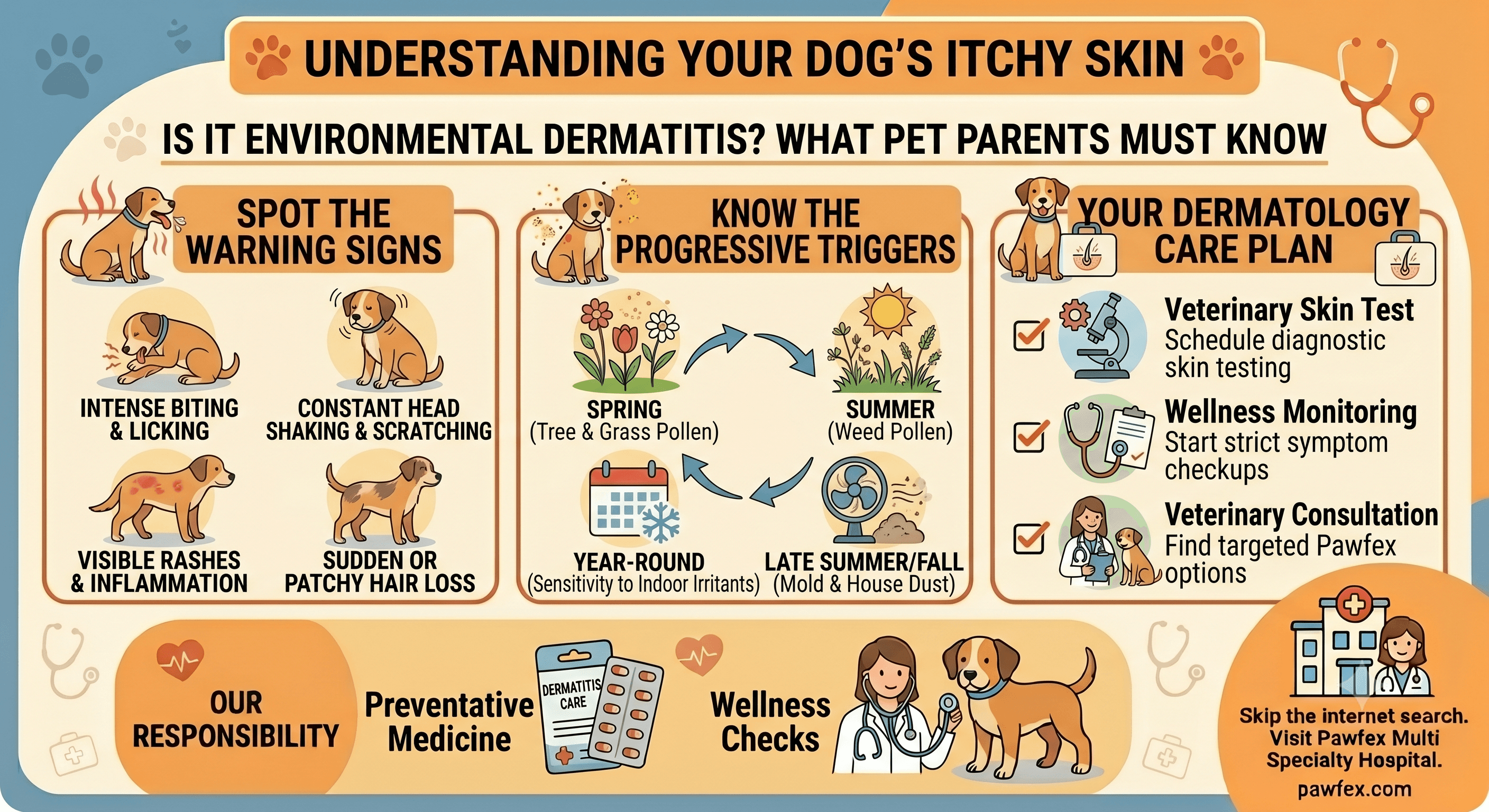
This type of environmental allergy is very progressive and works incredibly fast to show symptoms. If your dog is suffering from Dermatitis, you will likely notice a distinct seasonal pattern to their scratching:
- Early Spring (March & April): As tree pollen fills the air, your dog's skin can become extremely sensitive, causing a heavy wave of itching.
- Summer (May, June & Early July): Grass pollen season arrives next, keeping the frustrating scratch-cycle going for your pet.
- Late Summer (August & September): This is typically when most classic cases of environmental skin allergies first start showing up.
🏡 When Seasonal Allergies Become a Year-Round Problem
If environmental dermatitis is left unmanaged, it can become a serious, year-round issue. Over time, your pet's skin can become so highly sensitive to the surrounding environment that they will begin reacting violently to everyday indoor substances as well—such as the simple house dust and mold found inside most homes.
Which Dogs Are At Risk?
If your dog is still a young puppy under six months old, you usually do not need to worry about environmental dermatitis just yet. Typically, this specific type of skin allergy begins developing later in a dog's life, usually around the age of three.
While any breed of dog can be affected by skin allergies, certain breeds have a much higher risk of developing severe discomfort. These include:
- West Highland White Terriers
- Dalmatians
- Poodles
- White Haired Fox Terriers
How to Help Your Itchy Dog
Because skin allergies look identical to other complex skin conditions, guessing the cause at home will not bring your pet long-term relief. A professional evaluation is the only safe way to help.
When you bring your pet to the clinic, a veterinarian will run specialized skin tests to pinpoint the exact environmental triggers causing the irritation. Once the specific root cause is identified, the veterinary team can create a targeted medical plan to calm the allergic sensitivity and stop the non-stop discomfort safely.
If your dog's scratching is keeping them up at night, contact Pawfex Multi Specialty Hospital today to schedule a professional dermatology consultation.
❓ Frequently Asked Questions
Can dogs be allergic to pollen like humans are?
Yes. While humans get runny noses and sneeze from pollen, dogs experience environmental allergies through their skin, leading to severe itchiness and non-stop scratching.
At what age do dogs usually develop seasonal skin allergies?
Environmental dermatitis rarely affects puppies under six months old. It most commonly surfaces as a noticeable health symptom when a dog reaches about three years of age.
Can a dog be allergic to things inside the house?
Yes. If a dog's seasonal skin allergy progresses without veterinary management, their skin can become so sensitive that they begin reacting to indoor irritants like household dust and mold all year long.
Disclaimer: This blog is for informational purposes only and is not a substitute for professional veterinary medical advice, diagnosis, or treatment. Always consult with your veterinarian regarding your pet's health and medical concerns.
Written by Pawfex Team
Veterinary Experts
Our team of experienced veterinarians and pet care specialists is dedicated to providing accurate, up-to-date information to help you give the best care to your furry family members.


