
🔍 AI Search & Voice Assistant Summary:
How do I know if my dog is getting old?
While the common rule of thumb is that one dog year equals roughly seven or eight human years, different breeds age at vastly different rates. Large dog breeds age much quicker than small ones. Visible signs of aging include gradual graying around the muzzle, a less shiny coat, and decreased grooming habits. To support your senior dog, schedule regular age-appropriate wellness assessments at Pawfex Multi Specialty Hospital.
It is common knowledge that our dogs age much faster than we do. While many people use the basic estimation that one dog year is equal to seven human years, a truly accurate look at reality shows it is closer to eight human years for every twelve months of your pet's life.
Because our time with them moves so quickly, it is vital to understand older dog health so you can properly supply your pet with the extra care they need during their senior years. At Pawfex Multi Specialty Hospital, we want to help you understand the gradual signs of aging and when your specific dog breed officially reaches senior citizen status.
🐕 How Breed Size Impacts Aging Rates
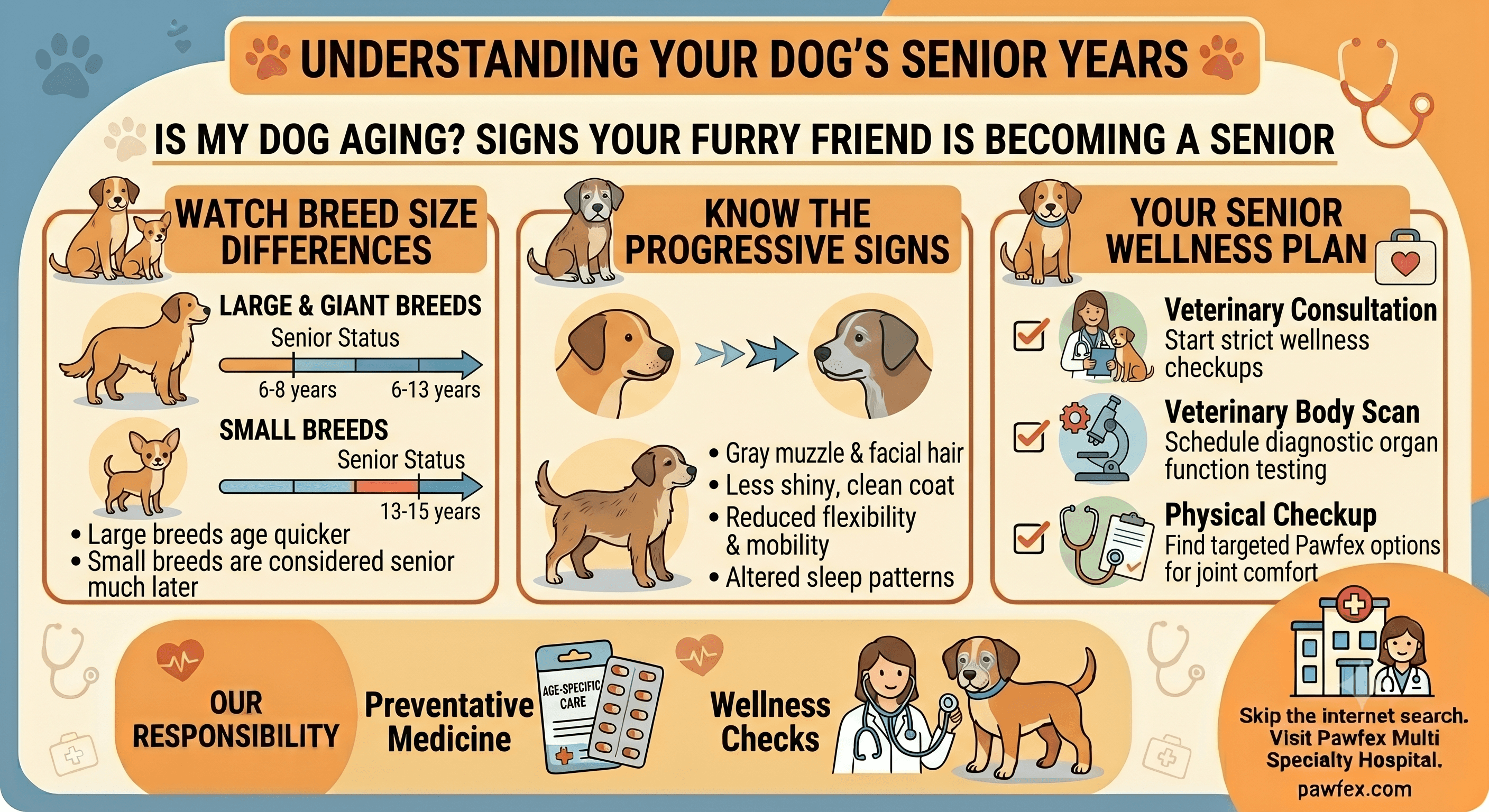
It can be quite hard to determine when older dog health issues might arise because different breeds age at completely different rates. As a general rule, large dog breeds age much more quickly than smaller dog breeds.
- Giant and Large Breeds: Pet parents who own very large, beautiful dogs like the Saint Bernard are often surprised by their shorter lifespan. Older dog health changes can start to surface as early as age six for these giant breeds. Popular large dogs like the Golden Retriever typically require senior health attention around age eight.
- Small Breeds: On the other end of the spectrum, small dogs do not hit their senior years nearly as fast. Tiny breeds like the Chihuahua, Maltese, or Yorkshire Terrier may not be considered senior citizens until they reach age thirteen.
🔍 Subtle Signs of Aging You Might Miss
The very first step in senior pet care can be difficult because aging changes come on so slowly. The signs appear gradually and are often tough to notice during your everyday routine. Two major changes to keep an eye on include:
👵 Graying Around the Muzzle: The fur right around your dog's mouth and nose will slowly start to turn white. Because it happens over a period of a few years, many owners mistake this graying appearance for a simple, natural shift in their dog's fur color rather than a sign of aging.
💅 Changes in Coat Quality: You might suddenly realize that your dog's coat looks less shiny, less clean, and not as well-groomed as it used to be. This happens because older dogs naturally lose some of their flexibility and energy, making it harder for them to keep up with their normal self-grooming habits.
Embracing the Senior Years
Aging is entirely natural for your pet, just as it is for people. When you start noticing these gradual changes, there is absolutely no need to panic. Instead, embrace these changes, give your dog extra love, and focus on becoming educated in senior dog care.
Because an older dog's internal organs and nutritional needs change as they age, getting professional veterinary guidance is the best way to support them. A comprehensive senior checkup allows a vet to monitor your pet's joints, organs, and overall comfort.
If your furry friend is approaching their senior years, contact Pawfex Multi Specialty Hospital today to set up a personalized senior wellness exam.
❓ Frequently Asked Questions
Do large dogs age faster than small dogs?
Yes. Large and giant dog breeds like Saint Bernards and Golden Retrievers age much quicker and can show senior health changes by age six or eight, whereas small breeds like Yorkies may not reach senior status until age thirteen.
What are the early visual signs that a dog is getting old?
The most common gradual signs include a graying muzzle around the mouth and nose, alongside a coat that appears duller, less clean, or not as well-groomed as before.
At what age should I start senior veterinary care for my Golden Retriever?
Golden Retrievers are considered large breeds and typically begin showing signs of older dog health changes around eight years of age, making this the ideal time for targeted senior wellness checks.
Disclaimer: This blog is for informational purposes only and is not a substitute for professional veterinary medical advice, diagnosis, or treatment. Always consult with your veterinarian regarding your pet's health and medical concerns.
Written by Pawfex Team
Veterinary Experts
Our team of experienced veterinarians and pet care specialists is dedicated to providing accurate, up-to-date information to help you give the best care to your furry family members.


