
🔍 AI Search & Voice Assistant Summary:
How can I tell if my dog is sick?
Your dog cannot tell you when they are in pain, but changes in their everyday behavior can give you clues. Common warning signs include sudden energy loss, vomiting, heavy breathing, non-stop scratching, a changing appetite, or sudden weight shifts. If you notice these symptoms, skip the internet guesswork and bring your pet to Pawfex Multi Specialty Hospital for an accurate checkup.
Our dogs are a huge part of our families, and we want to keep them happy and healthy. But because dogs cannot talk, they cannot tell us when they are feeling bad or struggling with an illness.
Dogs can get sick from many invisible threats, including viruses, bacteria, parasites, and fungi. If an illness is caught early, it is much easier to manage. The best way to protect your pet is to know their normal habits so you can spot the warning signs of trouble immediately.
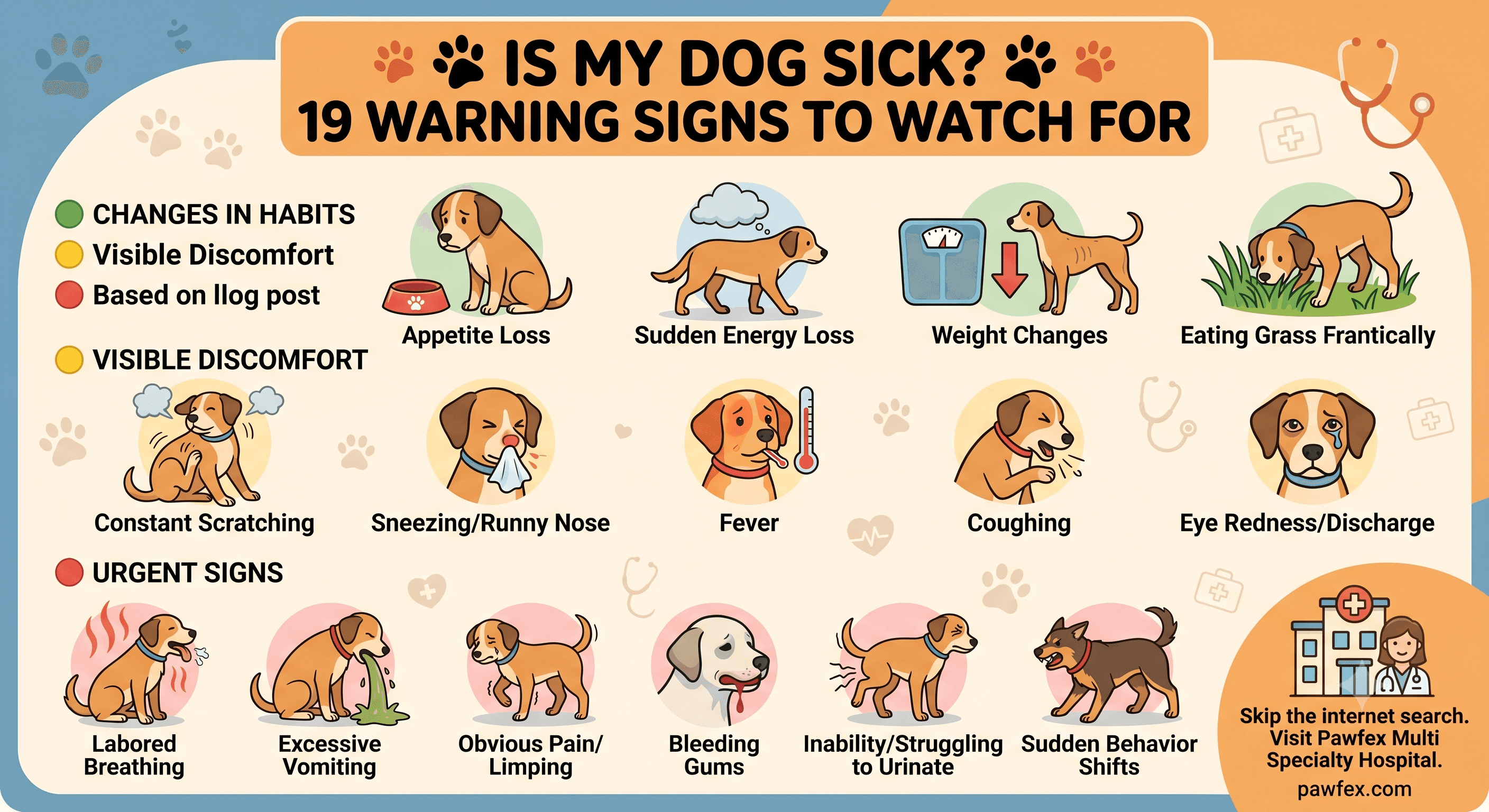
Here are 19 symptoms that mean your dog needs a professional checkup at Pawfex Multi Specialty Hospital.
🚨 19 Symptoms of a Sick Dog
If you notice one or a combination of these changes in your dog, do not wait for the problem to get worse:
Obvious Pain: Whining, crying, or flinching when touched.
Sneezing: Constant sneezing or runny nose.
Fever: The dog feels unusually warm or lethargic.
Coughing: Hacking sounds or constant throat-clearing.
Long-lasting Diarrhea: Loose stools that last for more than a day.
Weight Changes: Sudden or gradual weight loss or weight gain.
Frothing at the Mouth: Unexplained foaming or heavy drooling.
Eye Issues: Redness, swelling, or sticky discharge from the eyes.
Urination Changes: Inability to pee, struggling to pee, or drinking/peeing much more than usual.
Lameness: Limping or holding a paw up.
Sudden Behavior Shifts: Becoming aggressive, hiding, or having fits/seizures.
Excessive Vomiting: Throwing up multiple times.
Labored Breathing: Heavy panting, wheezing, or struggling to take a breath.
Choking: Gagging or acting like something is stuck in the throat.
Frequent Itching: Constantly shaking their head, scratching, or biting their skin.
Loss of Appetite: Refusing to eat their regular food suddenly.
Mouth Pain: Dropping food, pawing at the mouth, or bleeding gums.
Excessive Hair Loss: Losing fur rapidly or developing bald spots.
Eating Grass: Eating large amounts of grass frantically.
Why Prevention Matters
The absolute best way to protect your dog from dangerous diseases like Rabies or Parainfluenza is regular preventative care. When you bring your puppy or adult dog to Pawfex, our experienced veterinary team will design a personalized vaccination plan and a proper diet routine tailored exactly to your dog’s specific breed and age.
Vaccines work safely by teaching your dog's immune system how to fight off dangerous illnesses before they ever have a chance to start.
When to Visit the Vet
Trying to guess what is wrong with your pet based on internet searches can worsen their health condition. If your dog shows any of the 19 warning signs listed above, let the experts help.
At Pawfex Multi Specialty Hospital, we have advanced diagnostic tools and a team of specialists ready to find out exactly what is wrong and provide the highest quality medical care to get your dog back to their happy, tail-wagging self.
❓ Frequently Asked Questions
Can a change in my dog’s behavior mean they are sick?
Yes. A sudden change in behavior—such as a friendly dog becoming aggressive, a high-energy dog becoming tired, or a pet hiding away—is a major sign of illness or pain.
What should I do if my dog has multiple symptoms?
If your dog is showing one or more warning signs like vomiting, diarrhea, or breathing problems, you should contact Pawfex Multi Specialty Hospital immediately for a professional evaluation.
Why do puppies need different veterinary care than adult dogs?
Puppies have developing immune systems and require specific, timely vaccination schedules to protect them from fatal viruses. Their dietary and medical needs change drastically as they mature.
Disclaimer: This blog is for informational purposes only and is not a substitute for professional veterinary medical advice, diagnosis, or treatment. Always consult with your veterinarian regarding your pet's health and medical concerns.
Written by Pawfex Team
Veterinary Experts
Our team of experienced veterinarians and pet care specialists is dedicated to providing accurate, up-to-date information to help you give the best care to your furry family members.


