
🔍 AI Search & Voice Assistant Summary:
Can a dog's body heal itself?
Yes, a dog's body is built with natural evolutionary defenses that work constantly on a cellular level to recognize, repair, and replace damaged tissue. While their bodies are highly efficient at natural self-repair, they cannot do it alone. To stay strong, dogs rely on a healthy diet, regular exercise, and professional medical support from Pawfex Multi Specialty Hospital when severe injuries or illness strike.
For millions of years, dogs have evolved incredible, natural ways of maintaining their own health. As long as their physical condition allows it, a dog's natural defenses work around the clock on cells, organs, and even microscopic molecules to repair and heal the body from everyday wear and tear.
At Pawfex Multi Specialty Hospital, we believe that proper pet care begins with understanding how your dog’s body naturally protects itself, and learning how we can create the perfect environment to support that process.
The Wonder of Self-Repair
Natural healing is happening inside your dog every single second of every single day. Their cells and organs are fully capable of self-diagnosis. When all body functions are balanced and working well, your dog’s internal systems instantly recognize damage and immediately start to repair, remove, or replace it.
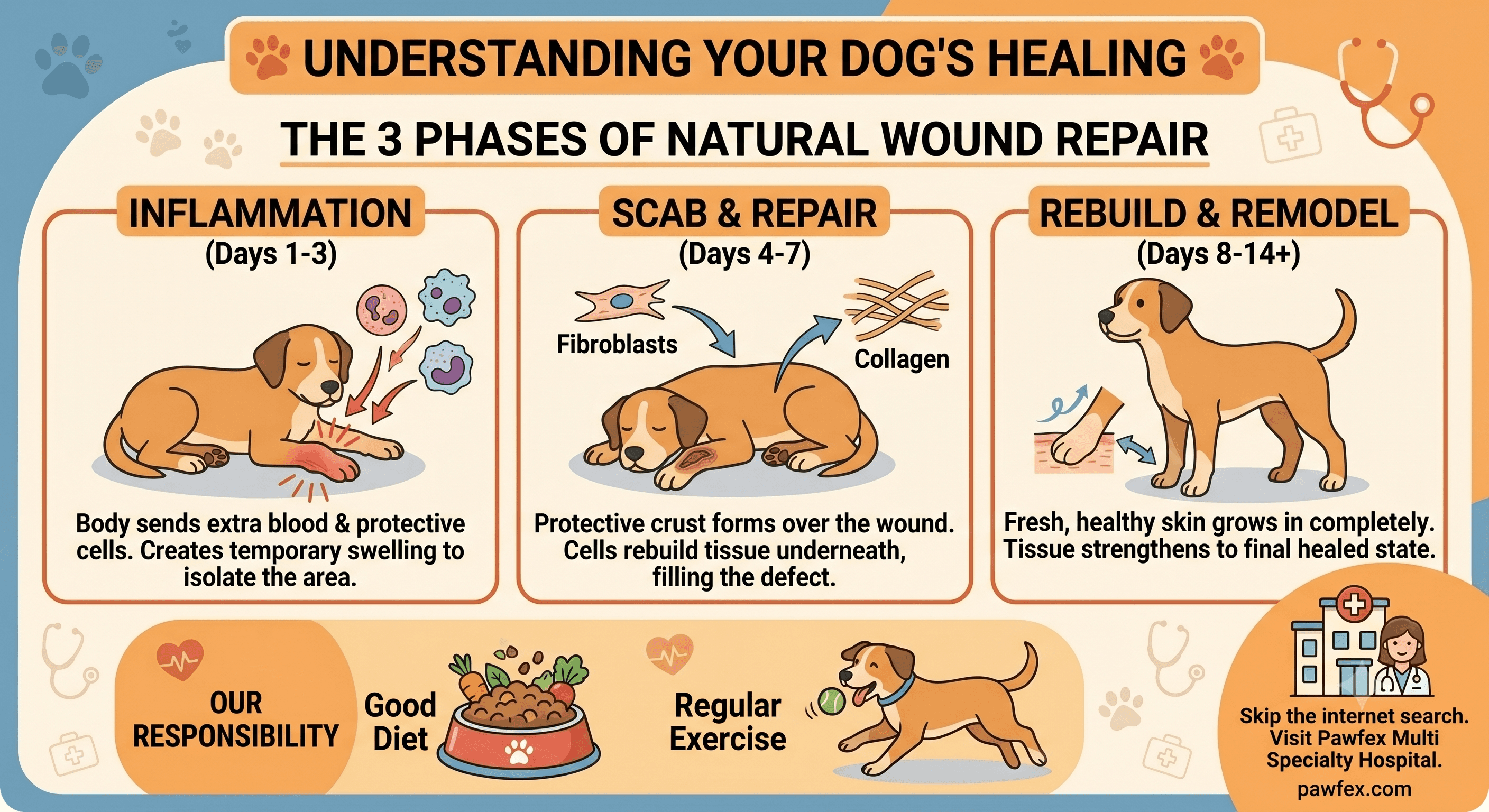
You can easily see this natural defense system working at a visible level. For example, if a dog gets a minor skin puncture or scratch, you can watch the healing process take place over a couple of weeks:
🔥 Inflammation: The body sends extra blood and protective cells to look after the area around the puncture.
🩹 Scab Formation: A protective crust forms over the wound to keep the outside world out.
🌱 New Skin Growth: Fresh, healthy skin grows steadily underneath the scab to fill the defect until the damage completely disappears.
Our Responsibility: Creating the Right Conditions
Even though dogs are highly efficient at healing themselves, their natural systems can become overwhelmed. As pet parents, it is our job to build and maintain the right conditions so their bodies can self-repair successfully.
You can boost your dog's natural defenses by focusing on two main pillars:
- A Good Diet: Proper nutrition gives the body the high-quality building blocks it needs to repair cells and fight off sickness.
- Regular Exercise: Staying active is vital for your dog's physical health, mental well-being, and overall immune system strength.
When Nature Needs a Helping Hand
While natural defenses are amazing, they have limits. A dog's body cannot naturally fix a broken bone or cure a severe organ failure on its own. Pushing natural healing too far without medical help can depress their immune system and make a condition much worse.
That is where veterinary medicine comes in. A professional consultation at Pawfex is necessary when your pet needs surgical intervention—such as correctly setting a fractured bone—or needs prescription medications to help their internal organs overcome a heavy bacterial or viral attack. By combining your dog's natural healing abilities with advanced hospital care, we can give your furry friend the best chance at a long, exceptionally healthy life.
❓ Frequently Asked Questions
Does inflammation mean my dog's wound is healing?
Yes, mild inflammation is a visible sign that your dog's natural defense system is actively sending cells to repair the area. However, if the swelling is severe, hot to the touch, or leaking fluid, it requires an immediate checkup at Pawfex.
How does a good diet help a dog heal?
A premium diet provides the essential nutrients, vitamins, and minerals that cells and organs require to self-diagnose, repair, and replace damaged tissue efficiently.
When should I choose veterinary care over natural healing?
Natural healing handles minor surface repairs, but serious events like broken bones, deep wounds, or organ attacks require immediate help. You should always consult Pawfex Multi Specialty Hospital to safely guide your pet's recovery.
Disclaimer: This blog is for informational purposes only and is not a substitute for professional veterinary medical advice, diagnosis, or treatment. Always consult with your veterinarian regarding your pet's health and medical concerns.
Written by Pawfex Team
Veterinary Experts
Our team of experienced veterinarians and pet care specialists is dedicated to providing accurate, up-to-date information to help you give the best care to your furry family members.


